
What Is a Healthy BMI for Men?
A healthy BMI for men is 18.5 to 24.9. See the BMI range by height, why muscle and age matter, and what to check alongside BMI.
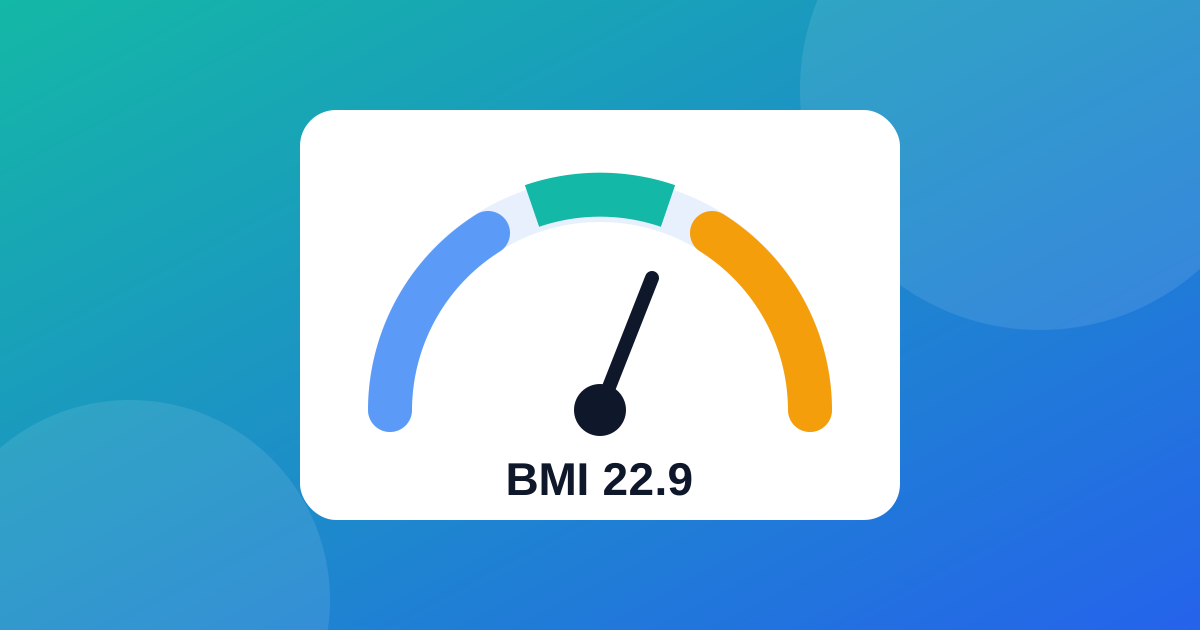
For adult men, a healthy BMI is 18.5 to 24.9. That is the same range used for women. The cut-offs do not change with sex, but what a given BMI actually means for your body can.
This guide covers the BMI ranges, the healthy weight for common heights, and the situations where BMI misleads, especially for men with a lot of muscle. To check your own number first, use the BMI Calculator.
Quick answer: a BMI from 18.5 to 24.9 is considered healthy for adult men. Below 18.5 is underweight, 25 to 29.9 is overweight, and 30 or more is obesity. BMI is a screening tool, so pair it with your waist measurement.
BMI ranges for adult men
BMI is your weight in kilograms divided by your height in metres squared. Health organizations such as the World Health Organization and the CDC use the same adult categories for men and women.
| BMI | Category | What it generally means |
|---|---|---|
| Below 18.5 | Underweight | May point to low muscle mass, poor nutrition, or an underlying condition. |
| 18.5 – 24.9 | Normal weight | The range linked with the lowest risk of weight-related problems. |
| 25.0 – 29.9 | Overweight | Risk starts to rise, but many muscular men land here. |
| 30.0 and above | Obesity | Higher risk of type 2 diabetes, heart disease, and high blood pressure. |
BMI = weight (kg) ÷ height (m)²
BMI = 703 × weight (lb) ÷ height (in)²
Healthy weight for men by height
Because the healthy range is a BMI band, it translates into a weight band that depends on height. Here is what 18.5 to 24.9 looks like in practice:
| Height | Healthy weight (kg) | Healthy weight (lb) |
|---|---|---|
| 160 cm (5′3″) | 47 – 64 kg | 104 – 141 lb |
| 165 cm (5′5″) | 50 – 68 kg | 111 – 149 lb |
| 170 cm (5′7″) | 53 – 72 kg | 118 – 159 lb |
| 175 cm (5′9″) | 57 – 76 kg | 125 – 168 lb |
| 180 cm (5′11″) | 60 – 81 kg | 132 – 178 lb |
| 185 cm (6′1″) | 63 – 85 kg | 140 – 188 lb |
| 190 cm (6′3″) | 67 – 90 kg | 147 – 198 lb |
The ranges are wide on purpose. Frame size, muscle, and where you carry weight all vary, so anywhere inside the band can be healthy. For your exact height, try the Healthy Weight Calculator.
A worked example
Take a man who is 178 cm tall and weighs 80 kg.
- Convert height to metres: 178 cm = 1.78 m.
- Square it: 1.78 × 1.78 = 3.17.
- Divide weight by that number: 80 ÷ 3.17 = 25.2.
A BMI of 25.2 is just over the line into the overweight category. At this height the healthy band is roughly 58.6 to 78.9 kg, so he is about 1 kg above it. That is a very small gap, and a tape measure around the waist would say more than the label does.
Why BMI can mislead men
Muscle counts as weight
BMI cannot tell muscle from fat. A man who lifts weights regularly can have a BMI above 25 with a low body fat percentage. A 180 cm man weighing 90 kg has a BMI of 27.8, which is labelled overweight, yet he may be lean and strong.
Men store fat around the belly
Men tend to carry fat around the abdomen, including deep fat around the organs. That kind of fat is more closely tied to heart disease and type 2 diabetes than fat stored elsewhere. Two men with the same BMI can have very different belly fat and very different risk.
Age changes the picture
Men often lose muscle and gain fat as they get older, even when their weight stays the same. A normal BMI can then hide a high body fat percentage. Some studies also suggest that a BMI slightly above 25 is not harmful in older adults, so a doctor may look at the whole picture rather than the number alone.
Ethnicity matters
For people of South Asian, East Asian, and some other backgrounds, health risks can start at a lower BMI. Several health bodies suggest using lower action points, commonly around 23 for increased risk and 27.5 for high risk. If this applies to you, ask your doctor which cut-offs they use.
What to check alongside BMI
A few quick measurements make BMI far more useful:
| Measure | A common guideline for men | Tool |
|---|---|---|
| Waist circumference | Above 102 cm (40 in) signals higher health risk. | A tape measure at navel level |
| Waist-to-height ratio | Keep your waist below half your height (under 0.5). | Waist-to-Height Ratio Calculator |
| Body fat percentage | About 14 – 17% is fitness range and 18 – 24% is average (ACE ranges). | Body Fat Calculator |
Tip: measure your waist after breathing out normally, with the tape snug but not squeezing. Check it monthly and track the trend rather than one reading.
If your BMI is outside the healthy range
Below 18.5
Focus on eating enough, and on building muscle with strength training. If the low weight is unintentional or comes with tiredness, see a doctor to rule out an underlying cause.
25 or above
First check your waist and body fat. If both are healthy, a BMI of 25 to 27 is usually not a concern. If your waist is large, small steady changes work best: more walking, strength training twice a week, fewer sugary drinks, and consistent sleep. Even a 5 to 10 percent weight loss can improve blood pressure and blood sugar.
Key takeaways
- A healthy BMI for adult men is 18.5 to 24.9, the same as for women.
- The healthy weight range depends on height, so use a chart or calculator rather than one number.
- BMI ignores muscle, age, and where fat is stored, so it can mislabel athletic men.
- Check your waist size and body fat alongside BMI for a more reliable picture.
- Some ethnic groups face higher risk at a lower BMI, so ask your doctor which cut-offs apply to you.
Note: this article is general information, not medical advice. Speak with a doctor about your own health, weight, or any concerns.
Frequently asked questions
A healthy BMI for an adult man is 18.5 to 24.9. This is the same range used for women. Below 18.5 is underweight, 25 to 29.9 is overweight, and 30 or higher is obesity.
This result is an estimate for informational and educational purposes. It isn’t a diagnosis and isn’t a substitute for advice from a doctor, registered dietitian, or other qualified professional. See our methodology and sources for the formula used and its limitations.